Swale Electrical Work, 7am–6pm
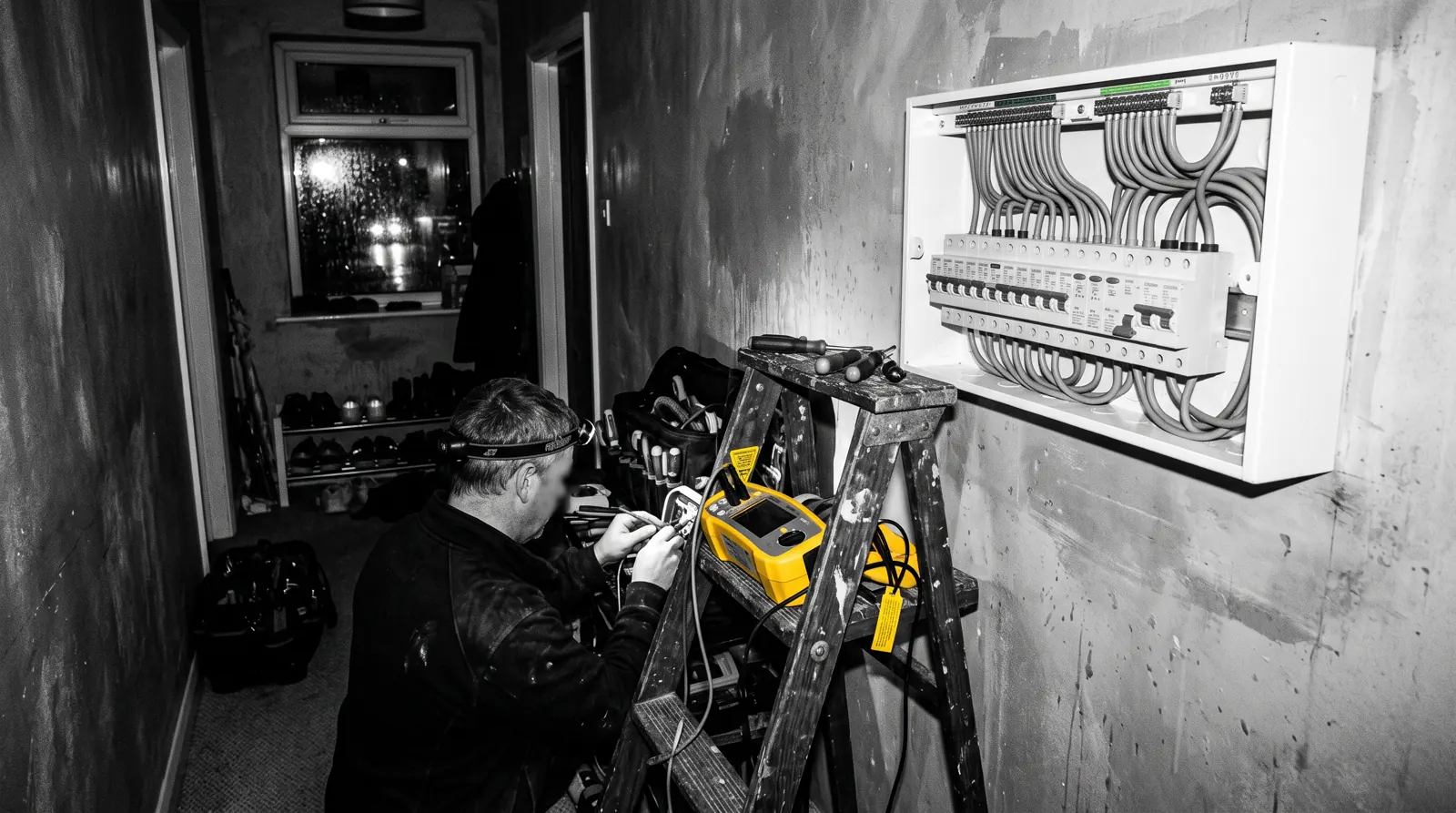
We carry out solar panel and battery electrical work across ME11 from 7am–6pm, Monday to Saturday, operating from Klondyke Industrial Estate and arranging visits around local commutes where possible. Before any installation we assess consumer units, earthing, cable routes and capacity—especially in older properties—and explain required work, pricing and disruption control. An emergency line is available outside normal hours.
Our services
Our most requested services in Swale are: 1.
The jobs we are called for most
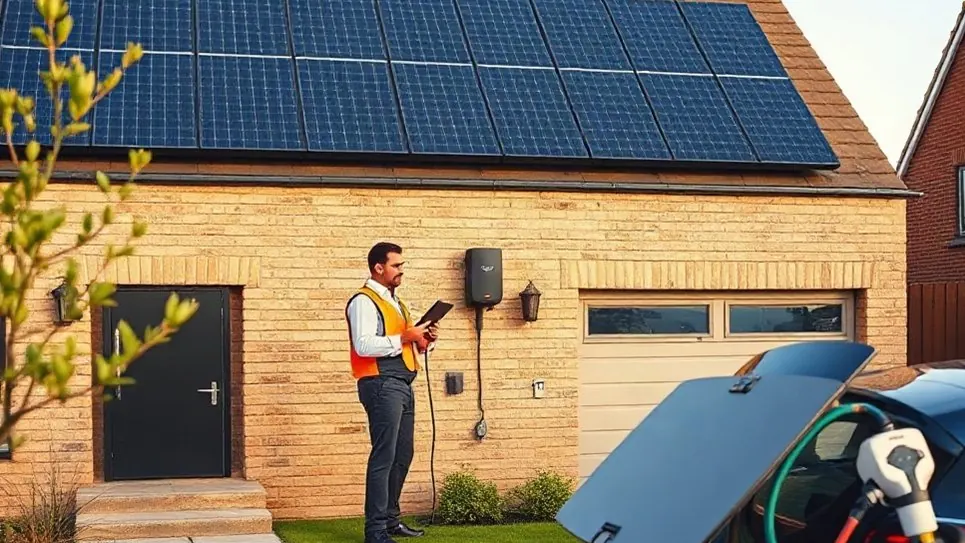
We’re most often called to Swale homes for solar panel installations, battery storage, consumer unit upgrades and the electrical checks needed to make a system safe and compliant. We assess roof orientation, shading, cable routes, earthing arrangements and available capacity before recommending a suitable photovoltaic and storage design.
In Victorian terraces around Leysdown and central Swale, older VIR or rubber cabling may need investigation before connecting generation equipment. We also attend properties affected by Flooded basements or river-related water ingress, where insulation resistance, bonding and equipment location require careful attention. Whether you’re in Sheerness, Minster-on-Sea, Eastchurch or ME11, we’ll explain the electrical priorities clearly and design work around your property.
What is included in every job
Every solar panel and battery storage job begins with a site survey, electrical assessment and a fixed written quotation before work starts. We inspect roof orientation, shading, access, structural considerations and the existing consumer unit, then design a system suited to your Swale property and electricity use.
Our installation checklist covers safe roof mounting, cable routes, isolators, earthing, surge protection, inverter positioning and battery clearances.
We supply and fit the agreed equipment, protect work areas, and leave the site tidy. Before handover, we complete commissioning tests to confirm generation, battery charging, monitoring and safety functions operate correctly.
Certificates and notification
For each installation, we complete the required electrical certification and notify the work where applicable under Part P. You’ll receive clear records for your solar PV, battery storage and any consumer unit alterations, confirming testing has been completed to current standards.
We also manage the relevant DNO process, including G98 or G99 applications where your system requires approval before connection. This is especially important when battery export settings, inverter capacity or existing generation affect the local network.
We track notification deadlines and provide the documents you need for your records, insurer and future property sale. If you move home, we can explain certificate transfer requirements and help you identify which paperwork should pass to the new owner. From Klondyke Industrial Estate, we support installations across Swale, Sheerness, Leysdown and surrounding areas.
What it costs
Solar-panel and battery-storage installation quotes in Swale are given as fixed prices after a free survey, with the written quote covering parts, labour, testing, certification and VAT. Final cost depends on roof layout, array size, consumer-unit capacity and battery location.
| Job | Price | What's included |
|---|---|---|
| Solar PV installation (small) | £3,500 | Panels, inverter, mounting, wiring, labour, testing, certification, VAT |
| Solar PV installation (medium) | £6,500 | Panels, inverter, mounting, wiring, labour, testing, certification, VAT |
| Solar PV installation (large) | £10,000 | Panels, inverter, mounting, wiring, labour, testing, certification, VAT |
| Battery storage (small) | £4,000 | Battery unit, containment, wiring, installation, testing, certification, VAT |
| Battery storage (large) | £8,000 | Battery unit, containment, wiring, installation, testing, certification, VAT |
Not included: plastering, decoration, asbestos removal, DNO supply-upgrade charges, scaffold or specialist access equipment.
How long each job takes
Most domestic solar PV installations in Swale take one to two days once scaffolding is in place, while adding a battery may take a further day depending on the consumer unit, cable route and chosen battery position. We’ll confirm your Installation duration after our free survey and schedule work to minimise disruption.
| Stage | What you can feel confident about |
|---|---|
| Survey and design | Clear plan before installation starts |
| Solar PV fitting | Careful, tidy work over one to two days |
We coordinate scaffolding, electrical testing, commissioning and DNO paperwork, so you’re not left chasing separate trades. If consumer-unit upgrades or longer cable runs are needed, we’ll explain the extra time beforehand. Once operational, we’ll outline sensible Maintenance schedules and show you how to monitor generation and battery performance.
Property types we work on around Swale
In Leysdown and central Swale we commonly work on Victorian terraces and mid‑Victorian townhouses (built c.1850–1900). For those properties we check for older fabric and wiring found in that area — for example we look for original vulcanised India rubber (VIR) insulation or early PVC upgrades in Leysdown’s terraced streets, and we assess loft access and chimney constraints typical of central Swale townhouses before proposing panel layouts that suit narrow, pitched roofs.
Sheerness and Queenborough feature a mix of period cottages and inter‑war to post‑war suburban homes. In Sheerness’s older cottages (late 19th to early 20th century) we pay particular attention to roof timbers and low loft clearances, while in Queenborough’s inter‑war semis we assess typical loft insulation levels and straightforward routes for cabling to ring main consumer units.
In Eastchurch and Minster-on-Sea we regularly see Victorian/Edwardian terraces and later 20th‑century houses respectively: in Eastchurch’s older terraces we check for historic wiring runs and chimney stacks when proposing panel positions, whereas in Minster-on-Sea’s varied stock (Victorian cottages through to 1980s detached homes) we tailor battery locations to garage or utility room spaces that are commonly available.
For listed buildings in central Swale conservation areas and in parts of Minster-on-Sea and Sheerness where properties are locally listed or within conservation boundaries, we discuss conservation‑area constraints and siting that reduces visual impact — such as placing batteries inside garages or basements and locating panels on rear‑facing roof planes where local planning guidelines permit — and we coordinate with conservation officers as required so the installation meets statutory requirements without compromising electrical safety.
Certificates you will receive
After assessing your Swale property’s roof, wiring and battery location, we will confirm which certificate(s) are appropriate for the installation. If the work requires a new circuit we will issue an Electrical Installation Certificate (EIC); for smaller additions to an existing circuit we will provide a Minor Electrical Installation Works Certificate where applicable.
We are NICEIC-approved and registered for Part P of the Building Regulations, which allows us in many cases to self-certify notifiable electrical work such as new circuits, consumer unit replacements and work in certain “special locations”. If work is notifiable and we self-certify, we will notify Building Control on your behalf; if self-certification is not available in a particular circumstance, you may need a separate Building Control inspection and we will advise you accordingly.
Your handover pack will identify the electrical work completed and include relevant warranty documents. We will also explain how to monitor generation, battery status and general system operation after commissioning. Please keep all certificates and paperwork with your property records.
Areas we cover from Swale
Coverage for solar panels and battery storage extends across Swale ME11. In Sheerness (a village with a mix of 1980s and 1990s semi-detached and detached houses) we inspect south- and west-facing roof pitches typical of post-war and late-20th-century estates and check loft access and consumer unit capacity before providing a fixed written price. In Queenborough, where many Victorian terraces and early-20th-century semis sit close to the town centre, we assess older wiring runs and limited roof space when surveying for panels and battery location.
In Leysdown, which contains a mixture of Victorian mill-worker cottages and inter-war housing along river corridors, we look specifically at roof orientation affected by nearby trees and at the suitability of outbuildings for battery siting. Eastchurch’s housing stock includes 1950s council-built terraces and 1970s detached homes; there we consider typical concrete tile roofs and the need for a consumer unit upgrade in some properties. Minster-on-Sea is characterised by 18th- and 19th-century cottages and later infill, so we check for conservation area restrictions and assess steeper, irregular roofs for mounting options.
Wherever you are within Swale ME11, we’ll plan a compliant installation specific to the property type and age, coordinate the necessary network notification for your local distribution network operator, and explain the practical options tailored to your home.